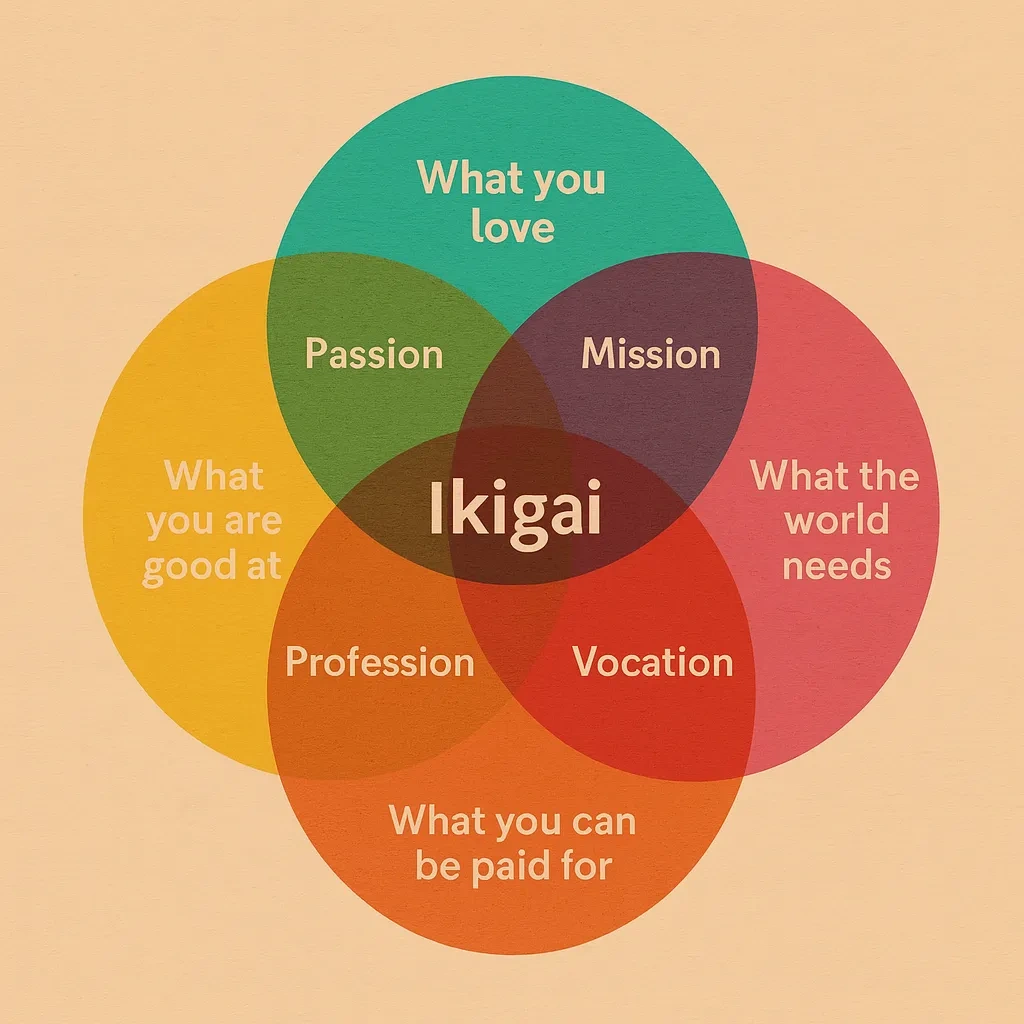
Many people encounter the ikigai diagram online and feel uncertain about what it truly means. The four circles appear simple, yet the purpose behind them often feels unclear. Some readers assume it is a career framework, while others expect it to deliver instant clarity about life direction. Our analysis shows that this confusion usually comes from brief explanations that focus on the image but ignore the meaning behind it.
At ikigaiibook.com, we found that most misunderstandings happen when the diagram is treated as the idea itself. In reality, the diagram is only a modern visual tool. Ikigai is far older than this model. In Japanese life, Ikigai relates to everyday meaning, small reasons to wake up with interest, and activities that make life feel worthwhile. It does not begin or end with work titles or income.
When this distinction becomes clear, the ikigai diagram starts to make sense. Instead of feeling overwhelming or misleading, it becomes a practical way to reflect on purpose using simple structure and real-life examples, especially when paired with the core principles outlined in the 10 Rules of ikigai.
ikigai Diagram Explained | What it is & What it isn’t
The ikigai diagram explained is a four-circle Venn diagram. Each circle represents one area of life: what you love, what you are good at, what the world needs, and what you can be paid for. Where these circles overlap, they describe different states such as passion, mission, profession, and vocation. The center point, where all four meet, is often called the “sweet spot,” and it closely connects with the deeper steps discussed in How to Find Your ikigai. Our analysis shows that people find the diagram helpful because it turns abstract ideas about purpose into something visible and structured.
The word ikigai comes from two Japanese terms. iki means life or being alive. Gai refers to worth or value. Together, they point to what makes life feel worth living. In simple terms, Ikigai is about having reasons to engage with life each day. Based on our findings, this meaning focuses more on lived experience than on achievement or status.
It’s important to separate the diagram from the original Japanese idea. The diagram is a modern framework created to help people reflect, especially in Western contexts. Traditional ikigai does not require all four circles to align. In Japan, ikigai often relates to daily routines, relationships, and small sources of satisfaction. When the diagram is seen as a tool rather than a rule, it becomes easier to use it in a realistic and meaningful way.
The 4 Circles in the ikigai Diagram
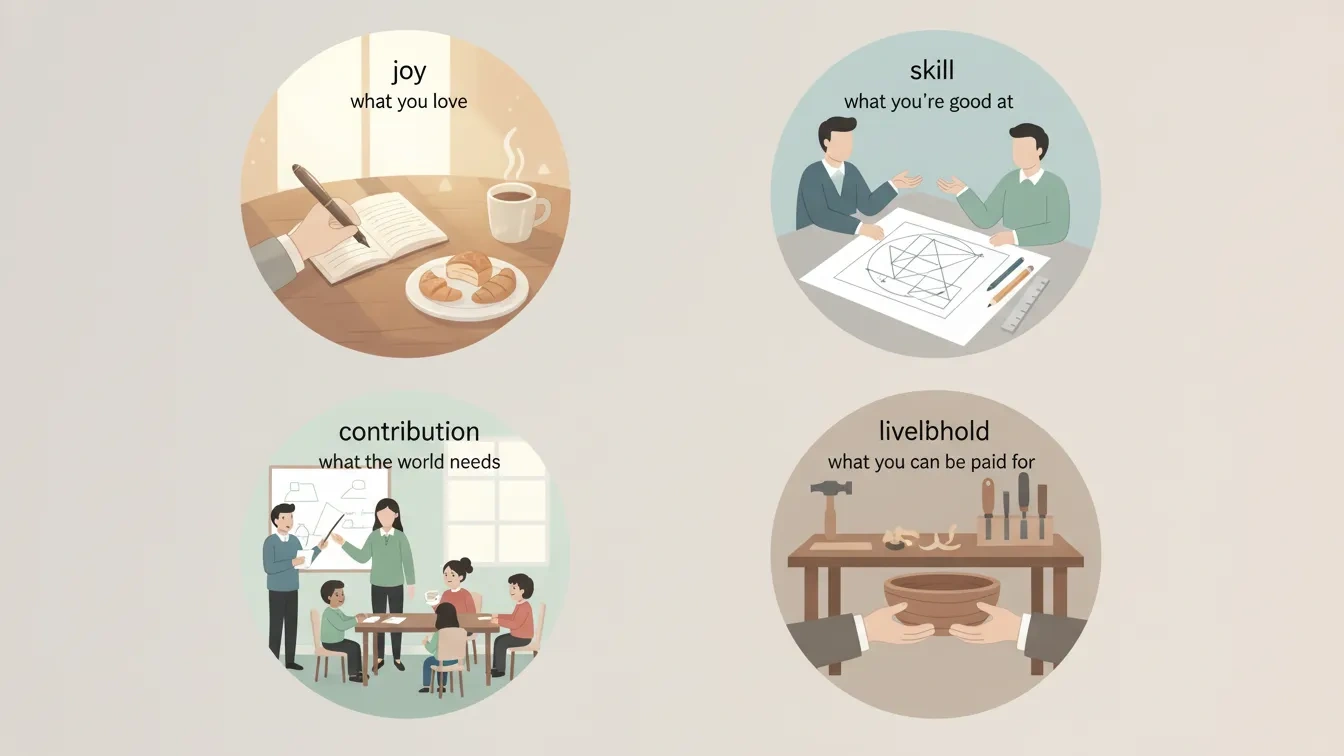
The ikigai diagram explained becomes clear once each circle is understood on its own. Each circle answers a different life question. Our analysis shows people struggle when they mix them too early. Start simple. Treat each circle as a separate list before looking for overlaps.
What You Love
This circle covers activities that bring joy and interest. These are things you choose even when no reward follows. They often make time feel lighter and more engaging. Based on our findings, people recognize this circle fastest.
Examples:
-
Writing for personal satisfaction
-
Cooking for family and friends
-
Learning a subject out of curiosity
What You’re Good At
This circle reflects skills and strengths. Some come naturally. Others develop through practice and effort. Mastery matters here, not enjoyment. At ikigaiibook.com, we found many people overlook skills they use daily.
Examples:
-
Clear communication
-
Problem solving
-
Teaching or mentoring others
What the World Needs
This circle points to contribution. It asks who benefits from what you do. The “world” can mean a small group, not everyone. Our analysis shows this circle often connects purpose with responsibility.
Examples:
-
Helping students understand complex topics
-
Supporting mental or emotional well-being
-
Improving systems that affect daily life
What You Can Be Paid For
This circle deals with income and demand. It reflects what people or markets are willing to support financially. Payment makes the effort sustainable over time. Based on our findings, ignoring this circle often leads to burnout.
Examples:
-
A service clients regularly request
-
A skill used in stable jobs
-
Work people value enough to fund
Understanding these four circles separately makes the ikigai diagram easier to use. The meaning appears when they begin to connect, not before.
What the Overlaps Mean & Why They Matter
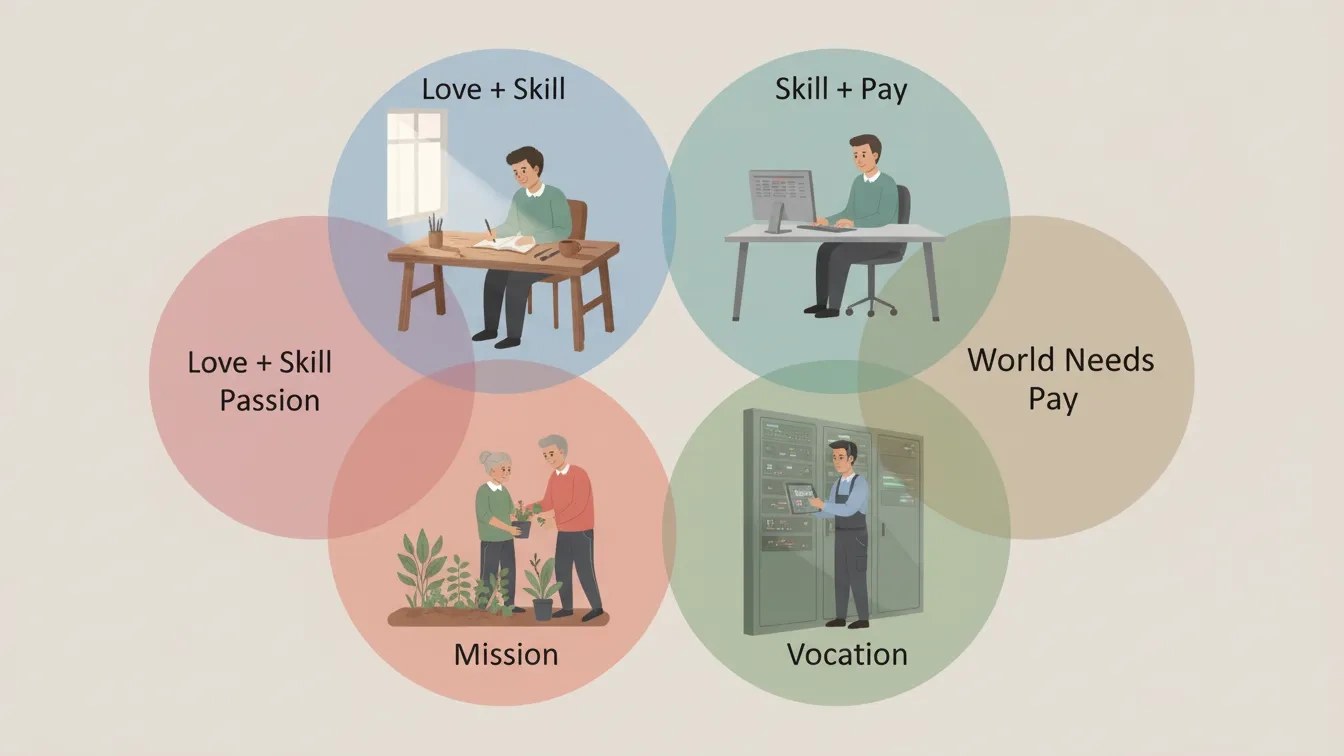
When people study the ikigai diagram, they often rush to the center. That’s a mistake. Our analysis shows that the overlaps matter first. Each overlap explains a real-life state that many people already live in. These states can feel meaningful, yet they are not the full picture.
Love + What You’re Good At = Passion
This overlap describes activities you enjoy and perform well, as shown in the ikigai diagram explained. It often shows up as hobbies or personal interests. Passion feels energizing, but it does not always help others or support long-term needs.
Example:
-
Writing stories you enjoy and do well, but keep private
What You’re Good At + What You Can Be Paid For = Profession
This overlap forms most careers. Skill and income align here. Many people stay in this zone for years. Based on our findings, satisfaction often fades when love or contribution is missing.
Example:
-
A job you perform well and get paid for, but feel detached from
What the World Needs + What You Can Be Paid For = Vocation
This overlap focuses on services that society supports financially. It feels useful and responsible. Still, without joy or skill growth, it can feel draining over time.
Example:
-
A stable role that solves real problems but feels repetitive
These overlaps can feel close to the center. They often bring partial fulfillment. The true center requires all four areas to connect. Understanding this difference helps people avoid forcing meaning where only alignment exists.
How to Use the ikigai Diagram
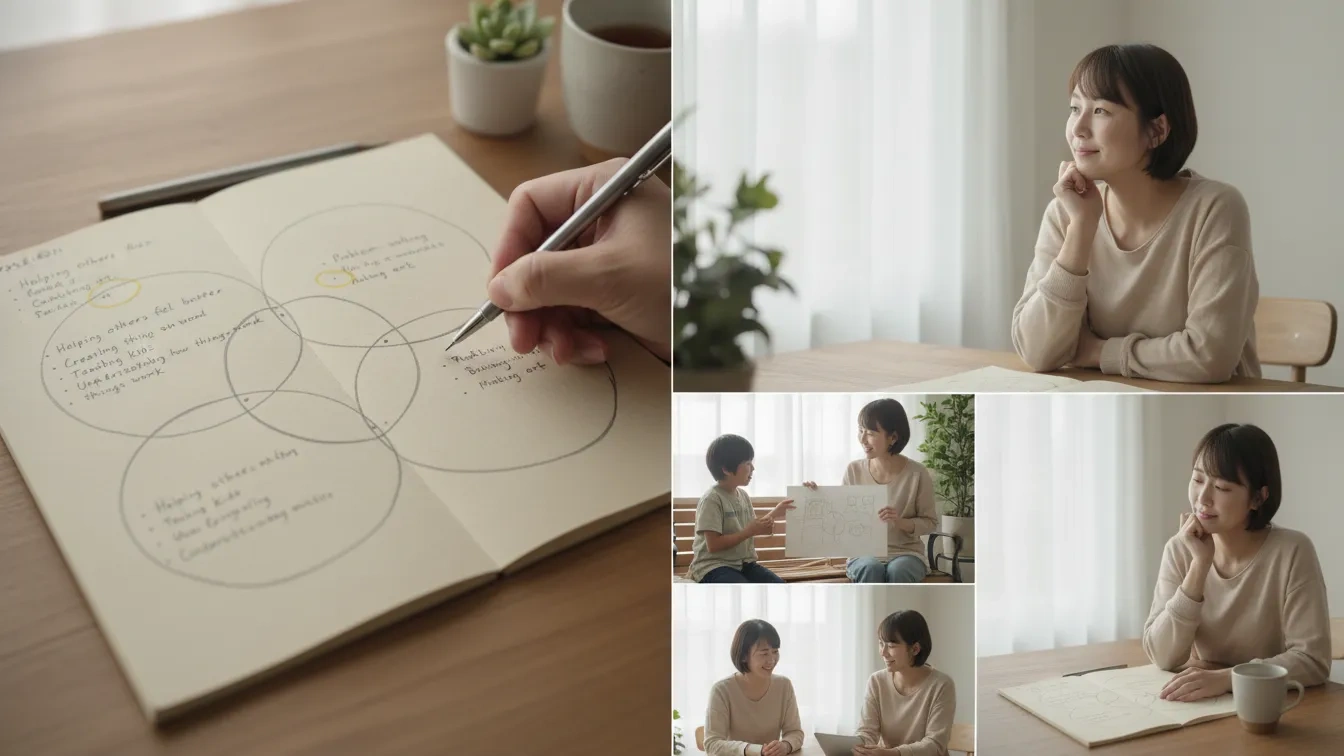
Using the ikigai diagram explained works best when you move slowly and stay honest. Our analysis shows people get stuck when they aim for a perfect answer. The diagram works as a reflection tool, not a test.
Step 1: Fill each circle with 10–15 items
Start fast. Don’t judge or filter. Write what comes to mind. In “What You Love,” list activities you choose freely. In “What You’re Good At,” include skills others rely on. For “What the World Needs,” think about who benefits. In “What You Can Be Paid For,” note skills people value enough to support.
Step 2: Mark items that repeat across circles
Now look for patterns. Circle or underline items that appear in more than one place. Based on our findings, these repeat signal alignments, not answers. You are mapping signals, not deciding your future.
Step 3: Test one or two center candidates in real life
Choose one or two ideas that sit near the center. Try small actions. Spend a week on one activity. Offer help, build something small, or share your work. Real experience matters more than thinking.
Step 4: Adjust after feedback
Notice what felt natural and what felt forced. Ask simple questions. Did energy increase or drop? Did others respond? Our analysis shows Ikigai becomes clearer through action, not reflection alone.
Real Examples of an ikigai “Center.”

Real clarity comes from everyday cases. Based on our findings at ikigaiibook.com, people understand the ikigai diagram best when they see it applied to normal lives, not extreme success stories.
Example 1: Student or Early Career
A student enjoys explaining topics to classmates. They feel calm while teaching. Over time, they become good at breaking ideas into simple steps. Their peers often ask for help before exams. This meets a clear need. Tutoring also brings a small income.
In the ikigai diagram explained, teaching appears in all four circles. The student loves it. They build skills through practice. Others benefit. Payment makes it sustainable. This does not lock them into one career. It simply shows a direction worth exploring next.
Example 2: Working Professional (Without Quitting the Job)
A working professional feels detached from their role but enjoys mentoring new hires. They explain systems clearly and stay patient. Colleagues trust them. The company values this support, even if it is not the main job task.
Our analysis shows this is common. Ikigai does not require quitting work. Here, the center appears through added responsibility and meaning within the same role. Small changes can create alignment without risk.
Example 3: Non-Career ikigai (Home, Retired, Caregiving)
A retired person finds purpose in daily routines. They garden, cook for family, and help neighbors. These actions bring calm and connection. Others rely on them. No salary exists, yet value remains strong.
Traditional ikigai often looks like this. Meaning comes from consistency and care, not titles. This example reminds us that the ikigai diagram supports life reflection, not career pressure.
These examples show one truth. ikigai looks different at each stage. What matters is alignment, not achievement.
Traditional ikigai vs the Diagram
There is an ongoing debate around the ikigai diagram and its roots. Our analysis shows the diagram is a Western-style model. It was created to organize ideas clearly, not to replace the original concept. The visual helps with reflection, but it does not define Ikigai on its own.
Traditional ikigai focuses on daily meaning. It centers on small joys, steady routines, and close relationships. In Japanese life, ikigai often comes from showing up each day with care. It may involve family roles, shared meals, or simple work done well. It does not require career success or perfect balance across four areas.
You may also hear about places like Okinawa or Ogimi when ikigai is discussed. These regions are known for long life. Some link this to a strong sense of purpose. Based on our findings, purpose is only one factor. Diet, movement, community bonds, and daily habits all play roles. Reducing long life to a single idea creates confusion.
When seen this way, the diagram becomes helpful again. It acts as a guide, not a rule. It supports reflection while respecting the deeper meaning of ikigai as a lived experience.
Common Mistakes People Make With the ikigai Diagram

Many people struggle with the ikigai diagram explained because they approach it with the wrong expectations. Our analysis shows these mistakes repeat across students, professionals, and retirees. Avoiding them makes the diagram far more useful.
One common mistake is treating the diagram like a perfect job finder. People expect one result that solves career, money, and meaning at once. This creates pressure. Ikigai was never meant to act as a job search tool. When used this way, the diagram feels frustrating instead of helpful.
Another mistake is forcing all four circles to match. Some readers believe Ikigai only exists at the exact center. Based on our findings, this belief blocks progress. Many people live meaningful lives within overlaps, not a perfect balance. Growth happens through movement, not precision.
Ignoring small, repeatable joys is another issue. Traditional ikigai values daily actions that bring calm and interest. These moments often feel too simple to list. Our work at ikigaiibook.com shows these small habits often matter more than big goals.
The final mistake is thinking ikigai is one fixed answer forever. Life changes. Roles shift. What feels meaningful today may evolve. ikigai works as an ongoing process, not a final destination.
Recognizing these patterns helps people use the diagram with clarity and patience.
Conclusion
The ikigai diagram explained works best when it is used as a reflection tool, not a final answer. Our analysis shows clarity comes from understanding each circle first, then testing small actions in real life. Ikigai grows through daily effort, honest feedback, and simple routines. When used with patience, the diagram helps people find direction without pressure or confusion.